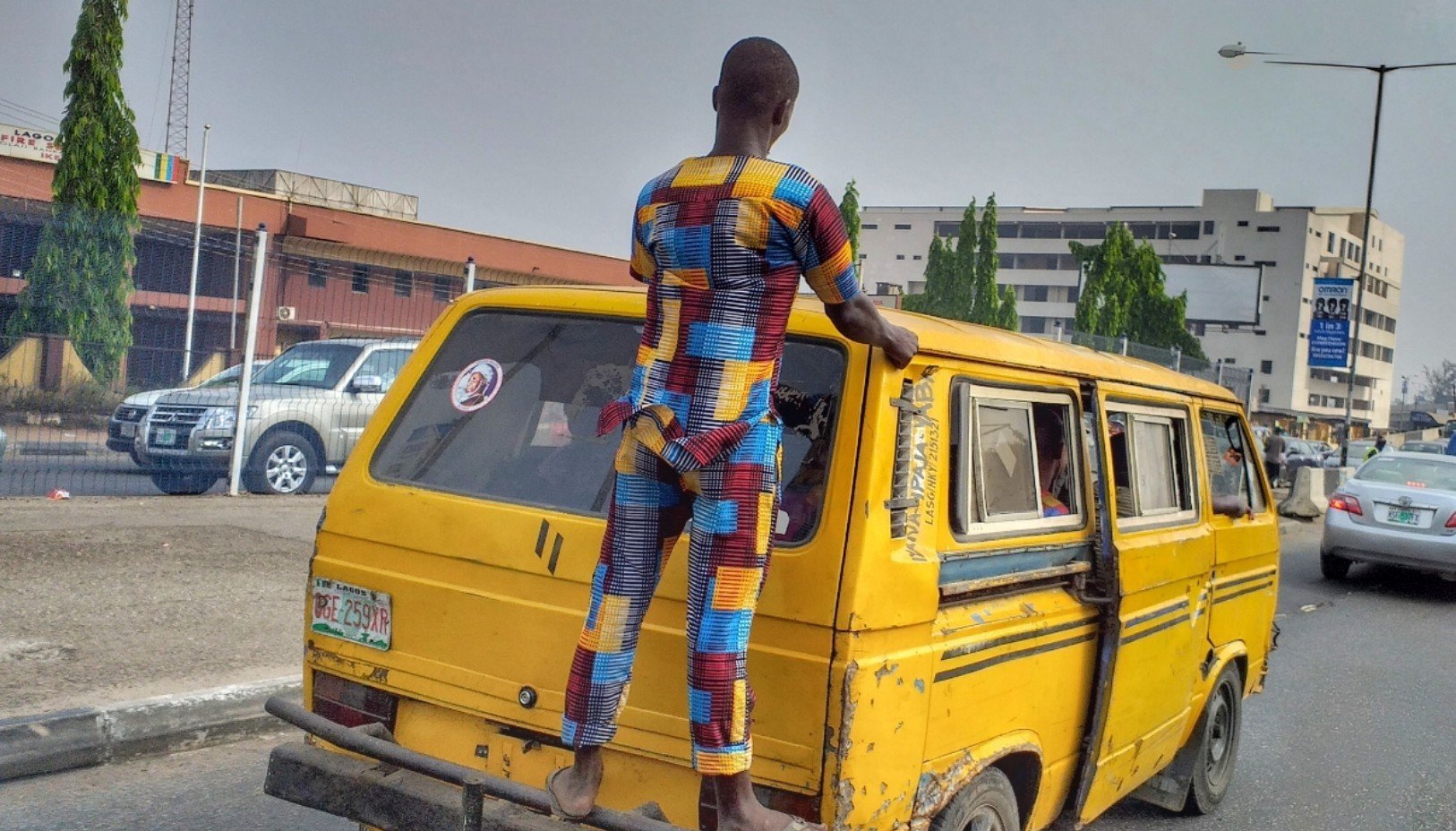
Who will enforce traffic rules on Nigeria’s commercial vehicles?
The Federal Road Safety Corps (FRSC) reminded Nigerians on August 18 that every passenger in a vehicle must have a working seatbelt and must wear it whenever the vehicle starts moving.
“Wear a seatbelt even for a 5-minute drive,” the Corps said in a post on X.
It was the direction of the responses to the post that caught my attention.
Nigerians were not arguing against the safety value of seatbelts. Again and again, the responses turned to commercial vehicles and the long-running concern about how road-safety rules are enforced on them.
The FRSC’s mandate covers road users and vehicles generally, including commercial transport.
The Corps is empowered to regulate the use of seatbelts and other safety devices and to regulate the movement of vehicles on Nigerian roads. Its own description of its responsibilities also says it regulates, enforces and coordinates road traffic and safety management activities. Commercial vehicles therefore fall within the Corps’ road-safety enforcement responsibilities.
Commercial vehicles deserve particular attention in any discussion of seatbelt enforcement because they routinely carry several passengers at a time. A crash involving a commercial bus can put far more people at risk than a crash involving an ordinary private car. Their passenger-carrying role makes the condition of their safety equipment and compliance with road-safety rules especially important.
The responses suggest that many Nigerians do not have that experience on the roads.
One commenter wrote: “You people need to start implementing these laws. How can passengers use seat belt when two people seat in front and four at the back and you just pretend as though you’re not aware?”
Another said: “I don’t rate you until you start enforcing these laws for commercial drivers too. Your men would see a car in good condition with complete papers and would still be looking for what’s not missing. Meanwhile, a commercial vehicle that’s barely moving gets a sure pass.”
Another wrote: “Enforce it on commercial drivers and quit yapping about it.”
A fourth commenter said: “Let’s not even talk about how your officers on the road don’t care about commercial bus drivers and front seat passengers not wearing seatbelts but you’ll penalise a private car driver for not using seatbelts”
Nigeria has had compulsory seatbelt requirements for years. The National Road Traffic Regulations require vehicles to be fitted with seatbelts and require occupants to wear them while the vehicle is in motion. The regulations also provide for a seatbelt for each seating position and require fitted seatbelts to be in good working condition.
The FRSC’s current official offence schedule lists seat belt violation as a traffic offence carrying a N2,000 penalty and five penalty points.
For many years, however, the seatbelt enforcement experienced by motorists and passengers has been most visible among drivers and front-seat occupants. That history helps explain why the prospect of enforcing the requirement on every passenger, particularly passengers in commercial vehicles, has generated such a strong reaction.
One commenter asked: “This particular instruction about seat belt is for PRIVATE CAR owners ONLY abi.”
The commenter followed with: “Does it apply to passengers inside Danfo or Korope?”
Another questioned whether the policy could be implemented without wider consequences for commercial transport in Lagos:
“Good advice but is it practicable now? You may have at least 50,000 commercial vehicles to be taken off Lagos roads.”
Another wrote: “I’m yet to see you enforce this with commercial vehicles and passengers. Even the drivers do not wear seatbelts and carry 2 people in the front seat.”
The reaction also brought up other safety conditions associated by the public with commercial vehicles.
One commenter said: “Every traffic law in Nigeria na for private cars…nothing concern commercial drivers. Many commercial buses on the road no get working lights”
A passenger can only use a seatbelt if the vehicle provides a functional one.
That is especially relevant in commercial buses. If there are more passengers than proper seating positions, or if belts are missing or defective, telling passengers to buckle up does not solve the problem. A seatbelt rule cannot work properly if the vehicle itself does not meet basic safety requirements.
The World Health Organisation identifies seatbelts as one of the most effective ways of reducing deaths and injuries among vehicle occupants. FRSC road-safety material similarly cites substantial reductions in the risk of death and serious injury for occupants who use seatbelts.
Nigeria’s road-crash figures show why the subject deserves serious attention.
The FRSC recorded 10,446 road traffic crashes and 5,289 deaths in 2025, with 33,400 people injured. The number of crashes rose from 9,570 in 2024, although fatalities fell from 5,421 to 5,289.
Between January and May 2026, the Corps recorded 2,214 road traffic crashes involving 4,165 vehicles. The crashes affected 16,349 people, killed 1,181 and injured 7,809. During the same period, the FRSC said it arrested 279,414 traffic offenders and booked 308,816 traffic offences nationwide.
A seatbelt cannot prevent every crash. It can, however, improve a passenger’s chances of surviving one.
Yet overcrowding and other safety violations remain familiar features of commercial transport despite repeated enforcement campaigns.
The FRSC has carried out enforcement operations against commercial vehicles. In October 2025, its FCT Command said it apprehended more than 250 commercial drivers within two days of an enforcement campaign against overloading. The operation also targeted the practice of carrying more than one passenger in the front seat.
So commercial vehicles are not outside enforcement.
I have also personally interacted with a couple of commercial vehicle drivers who told me they had never obtained a driver’s licence and had never been asked to produce one by any road traffic enforcement official since they started driving. Their accounts, though limited to those individual experiences, point to wider questions about how consistently basic traffic requirements are checked among commercial drivers.
Across major cities in Nigeria, it is also common to see commercial vehicle drivers engaging in reckless driving and making indiscriminate stops that disrupt traffic and contribute to avoidable incidents and hold-ups. These everyday experiences add another dimension to the public concern over whether traffic rules are being enforced consistently on commercial vehicles.
Another commenter wrote: “The day you guys succeed with this particular goal, I will crown you as the most serious agency in Nigeria. You can’t even get public transport buses to have working seat belts in their front seats!!! Achieve that first, then we can talk.”
For a passenger travelling by Danfo or Korope, compliance is not entirely within the passenger’s control. The passenger does not decide whether the vehicle has working seatbelts, how many people it carries or whether it is mechanically sound.
But the passenger remains inside the vehicle when it crashes.
The seatbelt requirement therefore also depends on the conditions in which commercial transport operates. There must be functional seatbelts for designated seating positions and reasonable passenger capacity. Drivers and vehicle owners must comply with the safety requirements that make it possible for passengers to comply too.
For millions of Nigerians, the real test will not be another reminder on social media. It will be the next commercial bus they enter and the safety conditions they find there.
The reaction to the FRSC’s post shows that the public lacks confidence in its enforcement capabilities, particularly on commercial vehicles.
Ladigbolu is a journalist based in Lagos