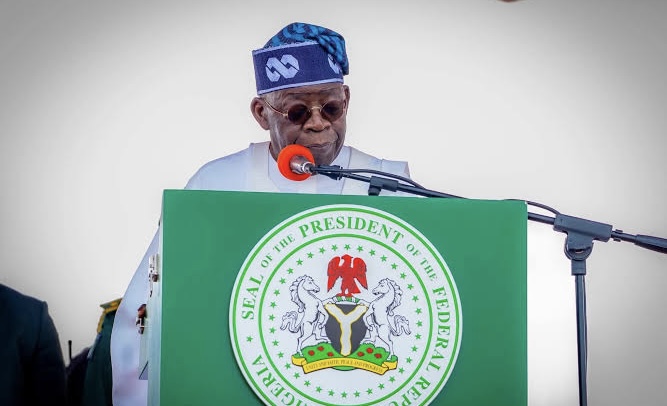
Fellow Nigerians, 27 years ago, many doubted democracy would survive here because of our diversity. Today, our diversity sustains our democracy.
Fellow Nigerians,
Today, we commemorate Democracy Day and celebrate the resilience and determination of the Nigerian people. For twenty-seven uninterrupted years, beginning from May 29, 1999, Nigerians have continued to choose their leaders through democratic elections, witnessed peaceful transfers of power, and settled disputes through lawful institutions rather than violence. This period represents the longest era of civilian governance in our nation’s history. While our democracy may not be flawless, it remains our collective achievement, one that we must continue to nurture and protect.
In the days ahead, elections will take place in Ekiti and Osun States. I call on INEC, security agencies, political parties, and all stakeholders to ensure that these elections are conducted peacefully, fairly, and transparently. Public confidence in the electoral process is essential for democracy to thrive. To the National Assembly, the Judiciary, the media, and civil society organisations, your role in safeguarding our democratic values remains invaluable. Continue to hold government accountable while maintaining faith in the Nigerian project.
To the youth of our nation, Nigeria belongs to you. Build your dreams here, innovate here, create opportunities here, and participate actively in the democratic process. Every successful nation was transformed by citizens who chose to contribute solutions rather than abandon challenges.
I extend my appreciation to our Armed Forces, the Police, and intelligence agencies for their sacrifices and dedication to national security. I also thank our traditional rulers, religious leaders, and community stakeholders for promoting peace, unity, and reconciliation across the country. Nation-building is a shared responsibility.
Today, we honour the perseverance of Nigerians who remained committed to freedom and democracy despite adversity. We remember those who faced harassment, imprisonment, exile, and even paid the ultimate sacrifice to secure the democratic freedoms we enjoy today. I pay tribute to labour activists, journalists, students, professionals, women, political leaders, and members of the armed forces, both living and departed, whose contributions have strengthened our democracy.
Although our hearts are heavy over the abduction of children in Oyo and Borno States, we remain optimistic about their safe rescue and return. Security remains a cornerstone of democratic governance. This administration has therefore declared a security emergency and approved the recruitment of over 50,000 police officers, alongside thousands of military personnel. In our 2026 budget, we allocated N5.41 trillion—the highest in our history—to defence and security, reaffirming our commitment to protecting lives and property.
Our security operations have evolved from conventional training partnerships with allies such as the United States, France, and other European nations to highly coordinated precision operations. Significant progress has been made in weakening terrorist networks, including operations that disrupted ISWAP activities in Borno State. Terror-related fatalities have declined significantly, while thousands of terrorists have been neutralised. At the same time, pathways for rehabilitation remain available, with many former fighters surrendering their weapons through Operation Safe Corridor.
To criminals, kidnappers, bandits, and those who support terrorism, the message is clear: surrender and embrace peace or face the full consequences of the law. The government will not tolerate those who profit from the suffering and bloodshed of innocent Nigerians.
This is not the time for blame or division. Criminality knows no tribe, religion, or region. We must stand together as one nation, confident that those who threaten our peace will ultimately be defeated. Together, we will overcome insecurity and continue building a stronger and more prosperous Nigeria.
June 12 remains one of the most significant dates in our national history. It symbolises more than an election; it represents the triumph of democratic ideals and national unity. We honour Chief M.K.O. Abiola, whose mandate reflected the aspirations of Nigerians across ethnic and religious lines, as well as Alhaja Kudirat Abiola and numerous other champions of democracy.
We also remember distinguished patriots such as Chief Gani Fawehinmi, Chief Bola Ige, Chief Alfred Rewane, Pa Abraham Adesanya, Chief Anthony Enahoro, Alhaji Balarabe Musa, Commodore Dan Suleiman, Dr. Beko Ransome-Kuti, Frank Kokori, Arthur Nwankwo, Chima Ubani, Shehu Musa Yar’Adua, and many others whose sacrifices paved the way for democratic governance.
As beneficiaries of their struggle, we must strengthen the institutions they fought to establish. The best way to honour them is to build a Nigeria where justice prevails, freedoms are protected, opportunities are expanded, and public officials remain accountable to the people.
The June 12 movement demonstrated the possibility of a united Nigerian nation. While its heroes secured political freedom, our generation must secure economic freedom. Democracy must be reflected in the everyday lives of citizens through employment opportunities, thriving businesses, successful farmers, and improved standards of living.
The reforms undertaken by this administration were necessary to address economic challenges that threatened our future. Since 2023, these reforms have improved economic stability, enhanced public revenue, strengthened fiscal transparency, and restored investor confidence across key sectors, including agriculture, energy, manufacturing, technology, mining, transportation, and the creative economy.
Domestic refining capacity has also expanded, improving energy security and reducing dependence on imported petroleum products.
When this administration assumed office, the power sector faced major challenges, including inadequate generation, weak transmission infrastructure, unreliable gas supply, significant metering deficits, and unsustainable debt burdens. To address these issues, we enacted the Electricity Act, empowering states to participate in power generation, transmission, and distribution. Efforts are ongoing to reduce the metering gap and resolve legacy debts, while rural electrification projects continue to bring power to underserved communities, educational institutions, markets, and healthcare facilities.
Across Nigeria, infrastructure projects are opening new economic opportunities by connecting communities, improving transportation, and facilitating trade. Through the National Agricultural Development Fund, thousands of tractors are being deployed to boost food production. Support for small and medium-scale enterprises has expanded, while non-oil exports continue to grow steadily.
Despite these achievements, we recognise that many Nigerians are still facing economic difficulties. Our focus remains on reducing inflation, increasing food production, creating jobs, improving living conditions, and building a resilient economy capable of delivering long-term prosperity.
We are transitioning from uncertainty to stability, and the next stage is to accelerate growth while ensuring that its benefits reach every household, community, and region. Democracy must not only be seen; it must also be felt in the lives and livelihoods of the people.
To strengthen governance at the grassroots, this administration has prioritised financial autonomy for all 774 local government councils. Effective local governance is essential to development, security, and service delivery. Through the Renewed Hope Agenda, we are committed to ensuring that governance positively impacts every Nigerian.
Every generation has a unique responsibility. Our founding fathers secured independence, the heroes of June 12 secured democracy, and our generation must secure prosperity.
Let us move forward united in purpose, rejecting division and despair while embracing hope, confidence, and national unity. Together, we can build a Nigeria where justice is accessible, liberty is protected, and opportunities are available to all.
We also honour General Shehu Musa Yar’Adua, whose vision and commitment contributed significantly to Nigeria’s democratic development. In recognition of his legacy, the Federal Government has approved the renaming and revitalisation of the Institute of Petroleum Studies in Kaduna as the General Shehu Musa Yar’Adua University of Geological Sciences and Engineering Technology.
Furthermore, I am pleased to announce national honours for several distinguished Nigerians who endured persecution, imprisonment, exile, and hardship in the struggle for democracy. Their sacrifices will never be forgotten, and the complete honours list will be officially released in the coming days.
Fellow Nigerians, many once doubted whether democracy could survive in a nation as diverse as ours. Today, that diversity remains one of our greatest strengths. The journey ahead may be challenging, but June 12 reminds us that Nigerians are resilient. We may face trials, but we remain determined and unbroken.
Let us renew our commitment to ensuring that the sacrifices of our heroes were not in vain and that government of the people, by the people, and for the people continues to flourish in our land.
May God bless the heroes of our democracy. May God bless the Federal Republic of Nigeria. And may God continue to bless us all.
Happy Democracy Day.
BOLA AHMED TINUBU, GCFR
President and Commander-in-Chief of the Armed Forces
Federal Republic of Nigeria