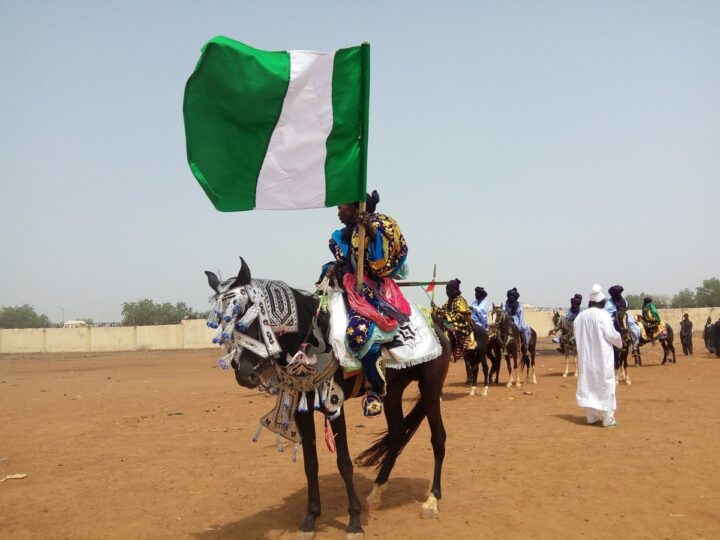
The Nigeria of my dreams
BY NNAA KALU NTO
Our elders say that a child who has never travelled thinks his mother is the best cook in the world. That is the trouble with the Nigeria we have today. Too many of our children have never tasted the other Nigeria, the one their parents grew up in, so they assume this is as good as it gets. They hear us talk about a country where petrol did not require prayer and fasting to obtain, and they look at us the way you look at an uncle who insists he once wrestled a lion.
We understand their doubt. Nobody believes in paradise they were not invited to. However, some of us were there. We remember when nobody screenshot their fuel receipt for social media because filling a tank was not an achievement worth documenting. We remember when NEPA supplied light so reliably that “up NEPA” was not yet a national prayer shouted in the dark by grown adults holding kerosene lanterns or candles like choir members. We remember buying cooking gas without doing mental arithmetic that would embarrass an accountant. Even as a teen, I never knew gas was bought by the kilo; all we did was swap empty cylinders for filled ones at the petrol station.
Memory, of course, is not an impartial witness. It edits for mercy the way a mother edits a photograph before hanging it on the wall, and a wise reader should distrust anyone who claims the past held no hunger, no injustice, no cruelty of its own. But there is a difference between a rose-tinted memory and a documented decline, and Nigeria’s is the rare case where the archives, the exchange rate, the hospital records and the school enrolment figures all agree with the grandfather telling stories on the veranda. When memory and data shake hands this firmly, the honest thing to do is believe them both.
If our parents could see Nigeria today, many of them would return from the grave just to apologise to the leaders they used to abuse in the sitting room at every nine o’clock NTA (Nigerian Television Authority) news. As the Igbo say, “Things will not remain well if we keep doing the same thing and expecting a different result.” Somebody, please tell our leaders.
We Once Lived. Now We Only Survive
There was a season when Nigerians made holiday plans instead of survival plans. As a young child, I remember visiting the Yankari Game Reserve with my parents along with other family friends. We all drove from Jos for this outing. I don’t think that trip took any serious financial toll on them. On weekends, we would visit the Zoo, Shere Hills, or the Wildlife Park. These were not extraordinary outings by any measure back then. Civil servants built houses from their salaries and savings. Teachers were respected, not pitied. Doctors stayed home because home still believed in them. Graduates walked into interviews with their chests out, not their hands out.
Here lies the first great paradox of our national story. Nigeria today produces more crude oil revenue, in nominal terms, than the Nigeria that could afford Yankari on a civil servant’s salary. A country can therefore grow richer in aggregate while its people grow poorer in particular, a trick performed not by scarcity but by capture. Economists have a name for nations cursed by the very wealth that ought to have freed them; ours may be the most thoroughly studied case on the continent. The oil did not fail us. The stewardship of it did.
Life then was not first class. It was economy, but a dignified economy, the kind where nobody apologised for existing. Today dignity itself has joined the list of imported items we can no longer afford. Nigerians always say that charity begins at home, yet in our own home the elders now export hope while importing excuses. Nigerians no longer dream of prosperity. They pray, quietly and desperately, against the next wave of hardship. Any leader who can hear that prayer and still sleep at night has a conscience that needs urgent resuscitation.
Childhood Was an Outdoor Sport
We owned the streets in a way today’s children can only imagine through cartoons. Our stadiums were sandy playgrounds, our goalposts were two abandoned school bags, and our biggest legal dispute was whether the ball crossed an imaginary line nobody could actually see. Our “court” proceedings during the game could last longer than the match itself, and the judge was usually whichever boy shouted the loudest. We played until the sun surrendered, and woe betide you if your aunt or mother came out to call you home. That call was usually accompanied by a heavy hiding. Another punishment awaiting us at home was a scolding for dirty feet, not a search party. Nobody feared kidnappers. Nobody feared ritual killers. Nobody feared that a child could vanish between one street corner and the next like a magic trick gone wrong. Growing up, we believed some of the outlandish fables we heard about ritualists and kidnapping were meant to deter children from speaking to or accepting gifts from strangers.
I remember in the late 80s, while preparing for my Air Force Military School interview in Jos. Every morning, at exactly 5am, I left the house alone and jogged around the Polo Field behind our home on Circular Road in Maiduguri. A boy. Alone. Five in the morning. Nobody’s mother lost sleep. Nobody’s phone rang every few minutes demanding proof of life, because life was not yet something you had to keep proving; and this was in the same Maiduguri that is currently under siege by Boko Haram terrorists.
Every society, whether it knows it or not, runs on an unwritten bargain: citizens surrender a portion of their freedom and their earnings, and in exchange the state guarantees the one thing an individual cannot easily guarantee alone, safety from arbitrary harm. A ten-year-old boy jogging alone at dawn was not innocence. It was a functioning contract. When that contract collapses, what returns is not merely insecurity but something closer to what our forebears fled when they first agreed to be governed at all, a state of nature dressed in modern clothing, complete with WhatsApp groups instead of watchmen.
Today grown adults share their live location before boarding a taxi, as though preparing evidence for an inquest that has not happened yet. That is not modernisation. That is a quiet, well-dressed tragedy. When something is clearly white, you do not call it black just because it is now fashionable to lie. We must call this decline exactly what it is.
When Universities Produced Hope, Not Refugees
There was a generation that studied at university for almost free, back when government still understood a simple truth: educating a nation’s youth is not a cost, it is a harvest waiting to happen. My father belonged to that era. He regaled us with stories of how they were supplied with toiletries every other day and how their bedsheets were changed as well; of how, with your meal ticket, you could devour a whole chicken if you had the stamina; of how the porters did their laundry, and of how many of them had holiday jobs during vacations. Students graduated without debts trailing them like village debt collectors. Companies queued at campus gates hunting for talent, and some final year students received appointment letters before they had even collected their certificates.
Today, thousands graduate with certificates and nowhere to place them except a drawer, alongside their dreams. Others take underemployment the way a hungry man takes akara without bread, grateful, but not satisfied. Eventually, many discover that the true value of their Nigerian degree is that it qualifies them for a visa interview. Only in Nigeria can a parent spend fifteen years financing an education, only to end up financing that same child’s emigration a year after graduation. There is a cruel arithmetic hidden inside that sentence. A nation spends scarce public money cultivating its most valuable asset, human capital, and then watches that asset mature precisely to the point of maximum usefulness, and depart. We have built, quite unintentionally, one of the world’s most efficient talent pipelines for other people’s economies. As they say, a poor man rarely eats what his own farm was capable of producing, and this country is one of the richest poor farms on earth.
Television Was Our Babysitter, and a Good One Too
Every afternoon we watched the clock the way modern children watch data balances, waiting impatiently for NTA to resume transmission. Programmes started with the television displaying vertical lines of the colour spectrum, followed by the National Anthem and National Pledge. Once NTA flickered to life around four o’clock, homework and chores were completed at Olympic speed because nobody, absolutely nobody, wanted to miss Sesame Street. Big Bird probably taught some of us better home training than half the finishing schools in Lagos today.
Then came other shows like Terrahawks, Battle of the Planets, Voltron, Kiddie Vision 101, and the rest; cartoons and programmes that entertained without corrupting. Tuesday evenings belonged to Basi and Company or The New Masquerade; I cannot recollect which it was. Thursday nights meant The Village Headmaster. Sunday evenings felt incomplete without Tales by Moonlight; that tortoise never once let us down. The amiable lady who hosted the programme, Nkem Oselloka, was every Nigerian kid’s favourite aunt.
Those programmes managed something today’s algorithms have not figured out, and perhaps were never designed to figure out. A shared broadcast schedule is, without anyone intending it, a quiet instrument of nationhood; millions of households laughing at the same joke at the same hour build a kind of invisible citizenship that no constitution can legislate into existence. The algorithm, by contrast, is built to know each of us alone, feeding every household a different reality at the same moment. We gained infinite choice and lost the accidental unity that came from having almost none.
Parents watched with their children. Children laughed with their parents. Families shared jokes and biscuits, not Wi-Fi passwords guarded more fiercely than the national vault.
Our Musicians Sang Wisdom, Not Just Melody
Our musicians did not merely release songs; they released values, the way a good preacher releases a sermon you did not know you needed. Dan Maraya Jos sang with the simplicity of an elder speaking at a village square. King Sunny Ade turned proverbs into rhythm. Onyeka Onwenu gave music elegance and a conscience of its own. Jide Obi inspired us. Bongos Ikwue soothed us. Oliver De Coque energised entire wedding halls without a single vulgar word. Chief Osita Osadebe celebrated life the way only a man who understood suffering could. Sunny Okosun reminded us, again and again, that success without character was simply noise wearing a suit.
Their lyrics taught. Their music healed. Their words outlived every fleeting trend, the way palm wine outlives the excitement of the first cup.
Culture does not merely entertain a society; it trains its appetite, quietly rehearsing what a generation will later consider admirable. Today, too much of what passes for music celebrates everything that once made decent society blush. Profanity now poses as poetry. Drug abuse is marketed as lifestyle. Gangsterism and cultism have become aspiration. Prostitution is repackaged, with a straight face, as empowerment. Internet fraud is celebrated as street intelligence, complete with its own dance steps. Somehow honest work has become the unfashionable choice, while criminality receives a standing ovation and a feature verse. No lawmaker signed this moral curriculum into effect, and that is precisely what makes it so effective; nobody voted for it, yet an entire generation is being quietly examined on it. A society should worry, seriously worry, when its entertainers shape children’s values more than their parents and teachers combined.
Even the Market Used to Smile
Market days carried genuine joy, and a salary actually behaved like a salary, stretching from one Sunday to the next without collapsing under its own weight. Rice did not require a financial planning meeting. Beans were affordable enough to be considered a poor man’s food, not a delicacy reserved for special Sundays. Garri was simply food, not a rolling economic indicator quoted alongside crude oil prices.
People walked into the market with a shopping list. Today they walk in with a calculator and the solemn expression of a man about to negotiate a peace treaty. Some now compare tomato prices with the seriousness of stockbrokers watching international oil markets crash. Inflation is often described in the newspapers as though it were weather, an impersonal force nobody controls. It is closer to a tax that was never debated in any chamber and never printed on any receipt, quietly moving wealth from the pocket of the woman selling tomatoes to the accounts of those who mismanaged the currency in the first place. When onions graduate into luxury goods, something in this country has gone seriously, comically, tragically wrong.
So Where Exactly Did We Miss the Road
Nigeria did not collapse overnight. Decline is a polite guest. It never announces itself at the front door. It slips in through the back, quietly, one abandoned project at a time, one stolen budget at a time, one compromised institution at a time, one election won without a whisper of accountability. One leader who valued applause over performance. One citizen who shrugged and accepted “this is Nigeria” as though mediocrity were written into our national anthem alongside the actual anthem.
There is a well-known experiment about a frog that will leap instantly from boiling water but will sit calmly in a pot brought to the boil one slow degree at a time. Whatever the science of amphibians, the psychology of nations is not in dispute. A single catastrophic year would have provoked revolt. Forty years of one percent decline a year provoked adjustment, then acceptance, then folklore, then, eventually, nostalgia articles like this one. Gradualism is not the opposite of disaster. It is disaster’s favourite disguise.
Then, without warning, abnormality wore normal’s clothes, and nobody at the door checked its identity card. Our elders warn that water does not fall from an empty sky, everything has a cause, and every crisis we face today was cooked, slowly, in a pot we all stood around and watched simmer. We kept dancing long after the music had turned into noise, and some of us are still dancing, out of habit, not joy.
The Nigeria of My Dreams
The Nigeria of my dreams is not asking for paradise. Heaven is already taken, and besides, we are not that ambitious. We are simply asking for decency.
There is a useful thought experiment in political philosophy: imagine designing a nation’s laws and institutions without knowing in advance whether you will be born into the family of a governor or the family of a nightwatchman, whether you will inherit an oil block or an outdoor toilet. Ask what rules a rational person would choose from behind that curtain of ignorance, and you will not arrive at private jets for a few and generator fumes for the many. You will arrive, almost embarrassingly, at exactly the ordinary things this essay keeps returning to. That the bar we are setting is so modest, and still so far out of reach, tells its own story about how far the design has drifted from anyone’s honest idea of fairness.
A country where honest work still feeds a family without a side hustle in fraud. Where hospitals save lives instead of writing referral letters to London and India. Where schools produce innovators instead of frustrated graduates fluent in disappointment. Where electricity powers factories instead of powering excuses and generator salesmen. Where security means Nigerians can sleep with both eyes closed, not one eye permanently on duty. Where justice is blind to wealth, not merely blind to the poor. Where public money remains, shockingly, public. Where leadership is understood as sacrifice, not as a jackpot with a convoy attached. Where children inherit opportunity, not apology.
That Nigeria is not a fantasy. We have lived inside it before. We know its address.
My One Kobo
As another election season gathers momentum, the billboards will multiply like mushrooms after rain, all teeth and no substance. Manifestoes will grow thicker than the promises inside them. Convoys will grow longer, sirens will blaze louder, and the same politicians who vanished after the last election will suddenly rediscover villages they had conveniently forgotten, remembering the names of market women they ignored for four straight years.
Dear political leaders, enough of the theatre. Enough of asking hungry Nigerians to endure more while those in power endure absolutely nothing, not even traffic. Enough of calling suffering “sacrifice” when the sacrifice is demanded only from people who cannot afford a generator, let alone a convoy.
Nigerians are not tired of democracy. They are tired of deception dressed up in agbada. They are tired of pensioners choosing between medicine and dinner as though it were a lifestyle decision. They are tired of graduates whose certificates gather dust while a governor’s child gathers foreign degrees on a scholarship nobody remembers approving. They are tired of mothers skipping meals so their children can eat, and fathers who leave home each morning carrying hope and return each evening carrying only exhaustion.
For once, govern from behind that same curtain of ignorance, as though you did not know in advance which family you would be born into. Govern as though every child in a public school were your own child. Govern as though every patient in a government hospital carried your family name on their file. Govern as though every pothole you ignore is a road your own children must one day travel at midnight. Govern as though power were a duty handed to you by God and by the people, not a jackpot you fought tooth and nail to win.
Above everything, remember this. Nigerians are not asking for luxury. They are asking for a fair chance at a decent life. Affordable food. Reliable electricity. Quality education. Healthcare that heals rather than humiliates. Roads that lead somewhere other than a mechanic’s workshop. Jobs with meaning attached. And the simple, ordinary dignity of working hard without remaining poor forever. These are not favours to be dispensed like campaign souvenirs. They are the minimum obligations of any government that dares to call itself responsible.
History will not remember how many rallies you held, how many dance steps you performed on stage, or how many T-shirts bore your face. History will remember one thing only: whether ordinary Nigerians lived better because you governed, or merely survived because they had no choice.
I urge every eligible Nigerian to go out and vote for leaders who have earned your trust through service, sacrifice and integrity. Vote for those whose records speak louder than their promises. Do not mortgage your future for a plate of jollof rice and three thousand naira from politicians who remember your existence only when they need your vote. Democracy rewards those who participate, not those who watch from the sidelines. If you choose not to vote when you have the opportunity, then you surrender your right to complain when poor governance begins to take its toll.
The Nigeria of my dreams is not hiding somewhere beyond the horizon, waiting for a miracle or a foreign investor. It is buried right here, beneath years of poor leadership, broken promises and squandered chances, and it is waiting, patiently, the way our ancestors waited for rain in the dry season, certain it would come, unwilling to give up the wait.
The question, the only question that truly matters, is whether those who seek to lead us have the courage to finally put the people before themselves. That, more than any slogan printed on a billboard or shouted from a campaign stage, will decide whether tomorrow’s children speak of Nigeria the way we once could, with pride, and not with pity.
We owe them that much. Better still, we owe ourselves that much.
And yet, before we close, sit with this. A nation can only be rebuilt by citizens who still believe it is worth rebuilding, but belief of that kind survives only by refusing to look too closely at how bad things truly are, while repair of that kind demands looking at nothing else. So which serves Nigeria better in the end, the hope that looks away just enough to keep working, or the clear-eyed despair that sees everything and, seeing everything, folds its hands? If our children can only inherit one of the two, which would we, in good conscience, hand them?