Trust as greatest investment for Nigeria’s economy
Countries do not become poor only because they run out of money. Sometimes, they become poorer because they run out of something far more valuable: institutional trust. History is replete with nations that possessed abundant natural resources, impressive infrastructure and enormous economic potential, yet found themselves isolated from the international investment community after squandering the assets I believe money cannot buy – trust and credibility.
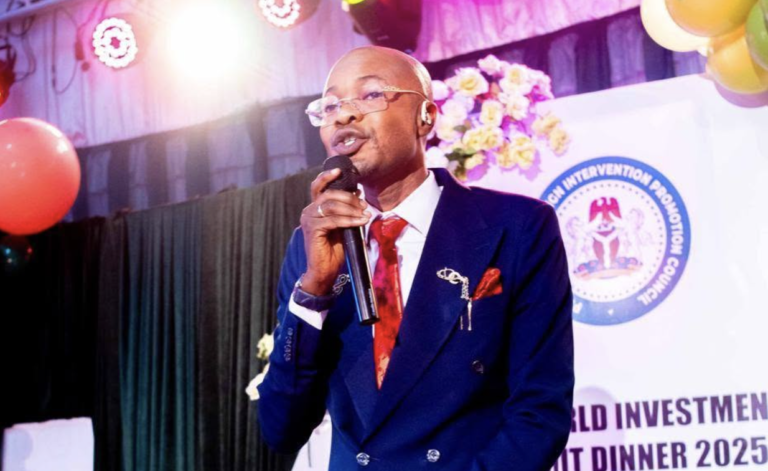
Economies have survived recessions, wars and crushing debt burdens, but very few have prospered after losing the confidence of their own citizens and the investors whose capital they desperately seek. That is why the unfolding controversy surrounding the Presidential Foreign Investment Promotion Council (PFIPC) should alarm every Nigerian. This, in my candid opinion, must not merely be another public sector scandal that will dominate newspaper headlines today and quietly fade away tomorrow, nor should it be viewed through the narrow prism of partisan politics as Nigerians are known for. It should be a defining moment that should compel us to confront a far thornier and more inconvenient question: what becomes of a country’s foreign investment story when the institution established to reassure becomes the very source of doubt?
Over the past few weeks, so much has been said. Countless opinions have been written and shared across different platforms, while a media frenzy has followed the controversy surrounding the Presidential Foreign Investment Promotion Council (PFIPC). According to the Nigerian Presidency, the Council has no legal foundation, having never been established by an Act of the National Assembly, a presidential instrument, an executive order or any formal presidential approval. Yet, in what can only be described as one of the most astonishing contradictions in recent public administration, ₦1.3 billion in taxpayers’ money found its way into the 2026 Appropriation Act for an institution the Presidency itself says has no legal existence. If that does not provoke profound questions about transparency, accountability and institutional credibility, it is difficult to imagine what will. This is no longer simply about an appropriation or an administrative anomaly; it is about the image of a country asking the world to trust its institutions while struggling to explain one that, by its own admission, should never have existed in the first place.
Nothing undermines a nation’s investment story more than the perception that the very institution established to inspire global confidence is itself engulfed in questions about its legitimacy and integrity. Each and every controversy surrounding an institution created to attract foreign capital sends conflicting signals to the very investors Nigeria is desperately trying to persuade. A country cannot spend months traversing the world’s financial capitals, projecting itself as an emerging investment destination and proclaiming that it is open for business, while allowing questions about openness, accountability and ethical governance to define the international conversation. That is not just contradictory; it is economically self-defeating. If our economic handlers are serious about sustaining the gains of these difficult economic reforms, then protecting the credibility of public institutions must rank alongside protecting macroeconomic stability.
This saga is far more than another embarrassing public controversy, with every unanswered question deepening the uncertainty and every institutional humiliation widening the credibility gap that the Tinubu administration has spent the past three years trying to close through painful economic reforms and many attempts at rewriting the country’s investment narrative. It is a deeply troubling episode that illustrates how institutional contradictions can erode public trust at home and weaken investor confidence abroad.
As Nigerians would say in pidgin, “This one pass film.” Except that this is not the kind of film risk-averse global investors watch for entertainment. They watch this kind of film to price risk, reassess confidence and decide whether a country is still deserving of their capital because in the world of international finance, a key lesson is usually learnt: every scandal is more than a headline; it is a signal which, positively or negatively, often determines where capital goes next.
My last opinion piece, ‘A war far away, a warning close to home’, elicited an interesting message from a highly respected resident of my estate. After reading it, she wrote: “I was enjoying the sweet flow of your beautiful write-up, almost smiling at the simple yet seamless presentation, until I got to the part where you supported this suffocating tax regime of the current government.” Her reaction did not surprise me. It was not the first time people within my social circles had accused me of supporting this administration’s economic reforms. I explained why I believe many of those reforms, however excruciatingly painful they have been for millions of Nigerians, were necessary and, in many respects, long overdue. But I also made a point that is often overlooked in our public discourse: the greatest threat to the success of any painful reform agenda is not the hardship it imposes but the steady erosion of public trust caused by recurring scandals and governance failures like this one. You can rightly expect Nigerians to endure sacrifice when they believe it serves a higher national purpose and when our political leaders hold themselves to the same account. What they will struggle to accept is being asked to tighten their belts while institutions entrusted with safeguarding the public interest continue to generate controversies that weaken confidence in the very reforms they are expected to uphold.
There is an old Yoruba proverb that captures this dilemma with surgical precision: “Tí a bá yan ẹ̀pà níwájú afọ́jú, a máa súfè ní.” Loosely translated, it means that if you are roasting groundnuts in the presence of a blind person, you will have to keep whistling. It is a timeless metaphor for accountability and transparency – or their absence. Talking about accountability and transparency, when those entrusted with managing public resources, confidence and public trust assume that citizens cannot see, they become less restrained in how they exercise power handed over to them by the same citizens.
That is precisely why controversies such as the PFIPC scandal are so corrosive. They reinforce a growing belief among many Nigerians that while the government has repeatedly defended its painful economic reforms as the unavoidable price of a more prosperous future and asking Nigerians to endure the excruciating economic pains, those entrusted with managing public institutions are not demonstrating the transparency and accountability needed to justify asking citizens to make such extraordinary sacrifices. It must be emphasised that economic reforms, however well-intentioned, cannot thrive for long in an atmosphere where public trust is steadily eroded by this kind of institutional controversy.
Whether one agrees with this administration’s reforms or not, one fact remains undeniable: Nigerians have paid dearly for them. This is nevertheless to suggest that one controversy automatically erases the gains of ongoing reforms. In the court of public opinion, every unresolved or politicised scandal heightens the suspicion that our collective patrimony – the proverbial roasted groundnuts – is quietly being consumed by those entrusted with roasting them on behalf of the Nigerian people, simply because they assume the owners are too blind to notice. And once citizens begin to lose faith in the integrity of those managing their sacrifices, even the most well-conceived reforms risk losing the public confidence they need to succeed.
The PFIPC controversy is undoubtedly about the individuals whose actions or omissions may have brought the nation into disrepute. If wrongdoing is established, they must be held fully accountable. But reducing this episode to nothing more than a hunt for culprits would be to miss the far more consequential tragedy unfolding before us. As the Yoruba wisely remind us, “Bí ilé bá ń jo, a kì í lé eku” – when the house is on fire, you do not waste precious time chasing rats. The real house at risk is not the reputation of any individual; it is Nigeria’s institutional credibility because the kind of reputational damage scandals like this inflict on a nation, unlike fiscal deficits, rarely fades with time as it cannot be simply legislated away or refinanced at more favourable terms. Left without prompt, sincere and transparent response from the government, it quietly accumulates and compounds into a credibility deficit and an ‘invincible tax’ on the nation’s reputation which perhaps, no economic reform, investment summit or presidential roadshow can readily erase.
As I conclude, the greater danger is not simply who may have erred, but the confidence that may have been fractured in a nation asking its own citizens to endure painful economic reforms while simultaneously urging the international investment community to place its trust in Nigerian institutions. Individuals can be replaced, institutions restructured but confidence, once lost, is infinitely harder to recover. Once public trust begins to crumble, it is never only those at the centre of the scandal who pay the price. The nation does. In such instances, tomorrow’s investments become tomorrow’s missed opportunities, while memoranda of understanding, investment pledges and expressions of interest quietly remain signatures on paper instead of becoming factories, jobs, technology transfer and the much-needed foreign exchange inflows required to boost our balance of payments and grow our economy exponentially.