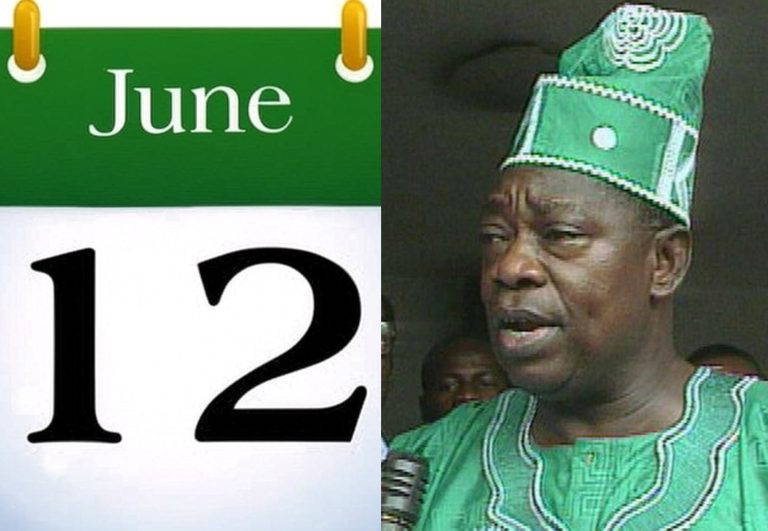
June 12: South-West’s democratic journey, gains and challenges
By Dayo Johnson, Rotimi Ojomoyela, Shina Abubakar, James Ogunnike & Adeola Badru
As Nigeria commemorates another Democracy Day on June 12, thirty-three years after the historic 1993 presidential election, renewed attention has turned to the South West geopolitical zone—widely regarded as the heart of one of the most defining democratic struggles in the nation’s history.
The annulment of the June 12, 1993 presidential poll, believed to have been won by late business magnate and politician Moshood Kashimawo Olawale (MKO) Abiola, sparked a nationwide resistance that reshaped Nigeria’s political trajectory. The South West, in particular, emerged as a central force in the agitation for democratic rule.
More than three decades later, experts say the region’s journey from the June 12 struggle to its current political standing provides key insights into resilience, political organisation, and democratic progress amid challenges such as economic hardship, ethnic divisions, and religious sensitivities.
From annulment to democratic awakening
The June 12 election remains one of the most widely celebrated polls in Nigeria’s history. Conducted under the military regime of Ibrahim Babangida, it was notable for its rare cross-ethnic voting pattern, which saw Nigerians overwhelmingly support candidates beyond regional lines.
However, its annulment triggered widespread protests, especially in the South West, where pro-democracy groups, labour unions, students, civil society organisations, and activists mobilised against military rule.
This resistance gave birth to influential movements, including the National Democratic Coalition (NADECO), whose members persistently campaigned for the restoration of democracy despite arrests, intimidation, and forced exile.
The struggle eventually contributed to the end of military rule and Nigeria’s return to democratic governance in 1999.
Political scholars note that the South West emerged from the period with a stronger democratic consciousness that continues to shape its political identity.
South West and democratic development
Since 1999, the South West has played a major role in strengthening Nigeria’s democratic institutions. The region has produced prominent leaders, activists, jurists, and academics who have consistently advocated constitutional governance, electoral reforms, and accountability.
Several states in the region have introduced reforms in education, healthcare, governance, and local administration, many of which later influenced national policies.
The region also remains actively involved in debates on restructuring, federalism, and electoral reforms.
According to the Secretary-General of the Ekiti Council of Elders, Segun Ajibulu, the region’s political strength is driven by a highly aware electorate that demands accountability from leaders.
Political milestones and achievements
Ajibulu noted that the South West has recorded significant political progress over the years.
He highlighted the transition from military resistance to full democratic participation, which enabled former activists to take up leadership roles at both state and national levels.
He also pointed to strong civic engagement, active voter participation, and a vibrant media landscape as defining features of the region.
According to him, the emergence of influential political blocs has strengthened the region’s bargaining power within Nigeria’s federation, while investments in infrastructure, education, and governance reforms reflect administrative progress.
Public affairs analyst Dr. Ajayi Bello also described the official recognition of June 12 as Democracy Day as a symbolic victory for the region’s long struggle.
Economic realities and pressures
Despite political achievements, analysts say the South West continues to face major economic challenges.
Rapid urbanisation, unemployment, inflation, and rising living costs have placed significant pressure on governments and residents.
Major cities such as Lagos continue to experience high migration rates, resulting in increased demand for housing, transportation, and public services.
While these challenges persist, governments in the region have attempted to respond through investments in transport systems, agriculture, industrialisation, and technology-driven initiatives.
Managing diversity and social tensions
The South West is widely regarded as one of Nigeria’s most tolerant regions, with Christians, Muslims, and traditional worshippers coexisting peacefully in many communities.
However, political analysts note that religious and ethnic sentiments occasionally emerge during elections and public debates.
According to Lanre Ogunsuyi, ethnic considerations remain a recurring feature in national politics, especially during discussions on resource sharing and federal appointments.
Nevertheless, the region has largely maintained a culture of dialogue and moderation, with traditional rulers and community leaders playing key roles in maintaining peace.
Ogunsuyi added that the experience of the June 12 struggle helped strengthen the belief that democracy must transcend ethnic and religious identities.
Continued political relevance
One notable feature of the South West’s political evolution is its consistent relevance in national politics.
Whether through opposition movements, alliances, or participation in ruling coalitions, the region has remained influential in shaping political direction at the national level.
Its strong media presence, active civil society, and educated population continue to reinforce its role in democratic discourse.
Stakeholders reflect on the legacy
Bello Ajayi, a public affairs analyst, said the June 12 struggle turned the South West into a symbol of democratic resistance.
He stated that the movement proved citizens could challenge authoritarian rule and demand accountability, a legacy that still influences political engagement today.
Former Ekiti State Commissioner, Lanre Ogunsuyi, described the struggle as a defence of electoral justice and democratic principles, noting that its impact continues through civic advocacy and governance reforms.
Segun Ajibulu added that the region’s strength lies in its ability to manage diversity despite political and economic challenges.
Lessons from June 12
More than three decades after the annulled election, analysts say the lessons of June 12 remain relevant. They highlight the importance of credible elections, strong institutions, rule of law, and active citizen participation.
The struggle also demonstrated that democratic progress requires sacrifice, unity, and sustained civic engagement.
As Nigeria marks Democracy Day, the South West’s political journey stands as both a reminder of past struggles and a call to protect and strengthen democratic institutions for future generations.