Nigeria, AfDB back Lagos-Dakar solid minerals processing corridor to boost value addition
Nigeria and the African Development Bank (AfDB) have agreed to back the creation of a West African minerals processing corridor stretching from Lagos to Dakar, with the AfDB committing financing to support the plan.
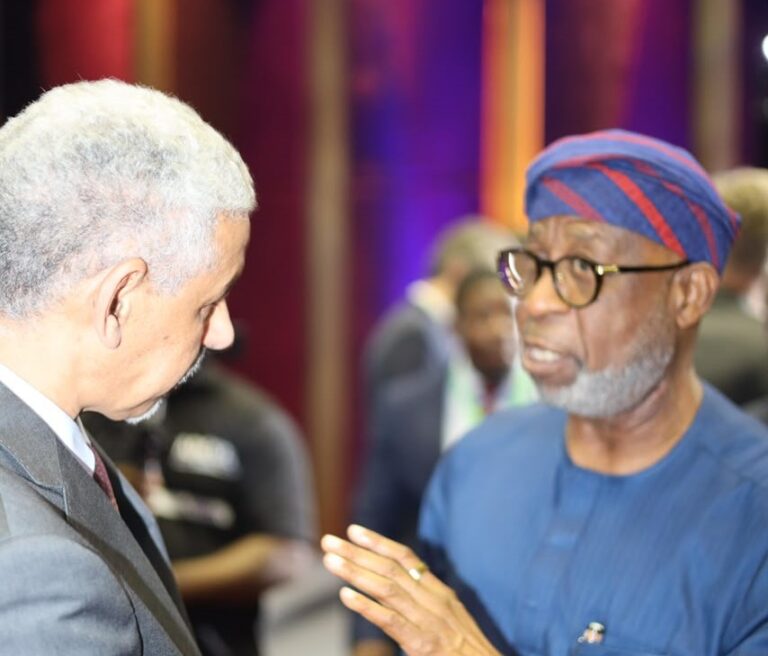
The agreement was reached at a conference on the ‘ministerial forum on critical minerals, value chain and beneficiation: pathways for African transformation’, held under the auspices of the AfDB in Abidjan, Côte d’Ivoire, according to a statement on Sunday.
In his welcome address, Sidi Ould Tah, the AfDB president, said Africa’s vast mineral wealth has yet to translate into commensurate gains in gross domestic product (GDP), despite the continent’s size and resources.
He also pointed to low levels of foreign direct investment (FDI) into Africa, describing it as a paradox of opportunity without adequate finance.
Dele Alake, Nigeria’s minister of solid minerals development, proposed the corridor, modelled on the Lobito Corridor, saying countries along the route would leverage their comparative advantages to serve as processing hubs for specific minerals.
He said the arrangement would reduce the financial burden on individual countries, lower costs, and allow nations to share both the risks and rewards of mineral development.
In response, the AfDB pledged, under the ‘Abidjan Declaration’, to deploy its financial instruments, capital-structuring capacity and technical expertise to support mineral-producing countries and mobilise investment into the sector.
The declaration also pledged to tackle the sector’s funding gap by de-risking strategic projects, financing critical infrastructure, developing bankable projects, and fast-tracking the creation of competitive and sustainable value chains in critical minerals.
Alake, who chairs the Africa Mineral Strategy Group (AMSG), also called for African sovereignty over the data and technical systems used to assess the continent’s mineral wealth, urging the adoption of the Pan African Resource Reporting Code (PARC) in place of the Australia-based Joint Ore Reserves Committee (JORC) standard.
“While the mantra of value addition has ushered in an era of economic independence for mineral-producing nations, we need concrete, actionable strategies to take charge and be in full control of our natural assets to ensure total economic freedom,” the minister was quoted as saying.
He noted that intra-African trade accounts for about 16 percent of total trade, compared with roughly 60 percent among Asian countries and 70 percent among European countries.
He attributed this gap to trade fragmentation on the continent.
More than 20 ministers responsible for mining, energy, industry, natural resources and the green economy attended the forum, alongside representatives of the AfDB, the African Export-Import Bank (Afreximbank), the US Export-Import Bank, and mining companies from Germany, Canada, and the United States.