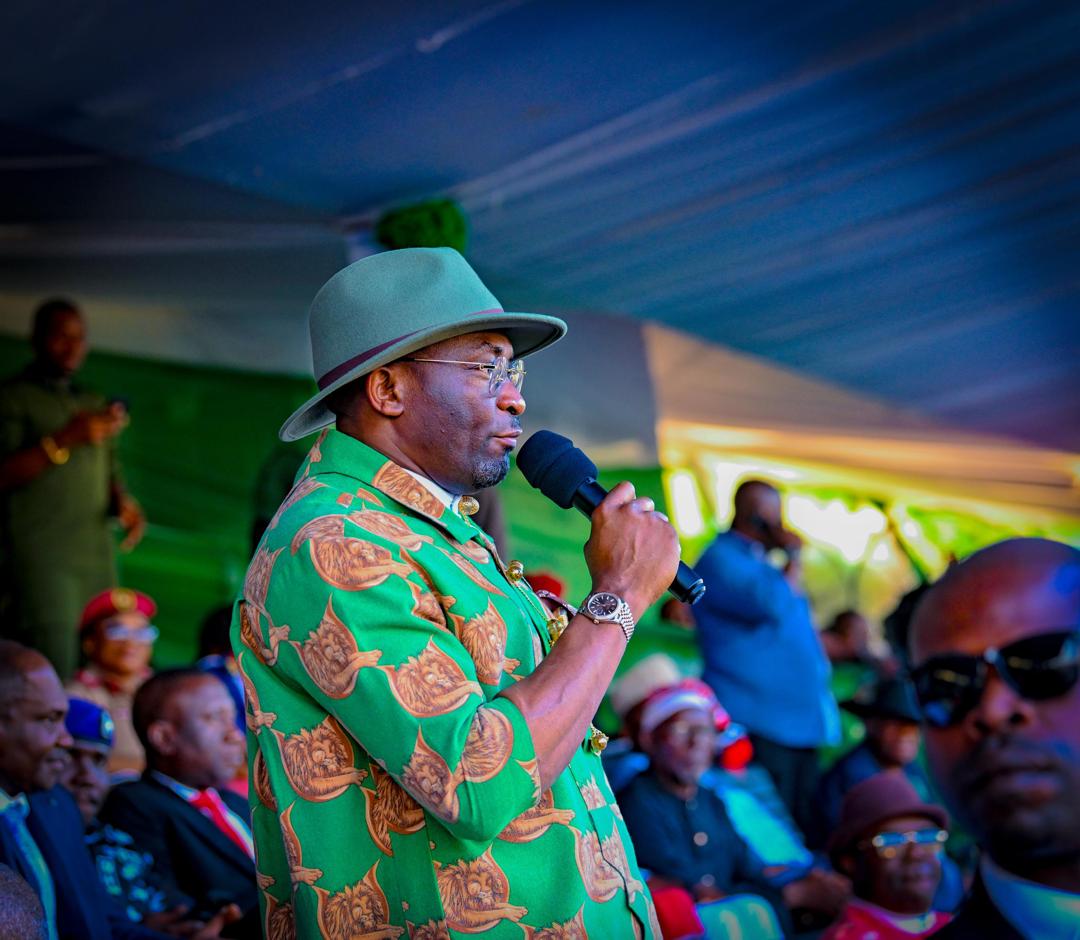
Benjamin Kalu: Churches, pilgrimages and the politics of wasting taxpayers’ money
The explanation offered by the deputy speaker of the house of representatives, Benjamin Kalu, regarding the controversial N1 billion allocation for church-related projects in his Bende constituency is not only unconvincing, but it also raises even more troubling questions about the priorities of Nigeria’s political class, especially under the Bola Tinubu-led administration.
Kalu insists that the allocation is not merely for the purchase of musical instruments for churches. According to him, it is a “Youth Re-orientation and Social Support Programme” to be delivered through an evangelistic approach by churches in Bende federal constituency. About 130 churches would receive between N5 million and ₦6 million each to procure evangelical equipment, public address systems and other materials to help campaign against drug abuse, sexual offences, violent crime and other social vices.
I have taken my time to look at his argument, and I can boldly say that his explanation does not hold water. If anything, it reinforces why the current national budget deserves serious public scrutiny.
The fundamental question is simple: Why should public funds be used to finance evangelistic activities in churches?
Nigeria is a secular state. While religion occupies an important place in the lives of millions, government resources belong equally to Christians, Muslims, adherents of traditional religions and those with no religious affiliation. Public money should be deployed for services that benefit all citizens without religious distinction.
Equipping churches with evangelical instruments and public address systems, no matter how noble the stated objective may be, falls outside what most Nigerians would reasonably expect to be financed from the national budget.
Kalu’s sponsored supporters, mostly on social media, have argued that religious organisations contribute to education, healthcare, humanitarian services, raising responsible citizens and therefore should be encouraged and supported by government. That is true. But that is not the issue here. The issue is whether constituency projects should become vehicles for funding evangelistic programmes under the guise of youth development.
If government believes youth re-orientation is necessary, it already has ministries, schools, vocational centres and community development programmes that can undertake the task without favouring one religious platform over another.
Once politicians begin allocating billions of naira to churches for evangelical purposes, where does it stop? Will lawmakers begin funding mosques in their constituencies? Will traditional religious institutions demand equal treatment? These questions go to the heart of constitutional neutrality and responsible public spending.
The controversy also raises a broader question about Nigeria’s long-standing practice of using taxpayers’ money to sponsor pilgrimages to Mecca and Jerusalem. It is another example of how successive governments have blurred the line between the responsibilities of the state and matters that ought to remain personal.
Every year, billions of naira are spent sponsoring pilgrims despite the country’s enormous developmental challenges. Government support often goes beyond subsidising the trips. Public funds are used to provide uniforms or matching attires (aso ebi), logistics and welfare packages. This has become so normalised that many Nigerians no longer question whether it is an appropriate use of scarce public resources. It is not.
From videos circulating online, many of those sponsored on these religious pilgrimages do not appear to be genuine devotees. Instead, beneficiaries are often alleged to include friends, family members, political associates, side chicks and other cronies of those in power. Rather than reflecting the solemnity of a spiritual journey, social media is frequently awash with photographs of beneficiaries flaunting their trips, suggesting that the primary purpose of the pilgrimage has been overshadowed by patronage and personal gratification.
Religion is a deeply personal matter. Those who wish to undertake pilgrimages should do so through their personal savings, family support, religious organisations or charitable donations—not from the public purse.
Nigerian politicians frequently travel to countries such as the United Kingdom, the United States and France for medical treatment, official engagements or to educate their children. In just the past two weeks, many of them travelled abroad to attend the graduation ceremonies of their children in foreign universities. They should ask themselves a simple question: Do those countries use taxpayers’ money to sponsor citizens on religious pilgrimages? The answer is no!
In those democracies, religion is largely treated as a private affair. Individuals who wish to embark on pilgrimages finance them through their own resources or with support from family, charities or religious bodies. In the United States, for example, the Constitution’s Establishment Clause has generally been interpreted as preventing the federal government from financing religious activities in a manner that amounts to state endorsement of religion.
Nigeria’s Constitution equally guarantees freedom of religion, but that should not translate into an obligation on government to finance religious activities. A government struggling to provide quality education, functional healthcare, reliable electricity, good roads and adequate security has no moral justification for spending billions on pilgrimages or evangelistic programmes.
The timing of Kalu’s budget proposal makes the matter even more troubling. Nigeria is facing one of the most difficult periods in its history. Thousands of citizens remain displaced in Internally Displaced Persons (IDP) camps because of terrorism and banditry. Public hospitals are underfunded and poorly equipped. Soldiers and other security personnel battling insurgents and kidnappers continue to complain about inadequate welfare and equipment. Millions of children remain out of school while inflation and unemployment have pushed more families into poverty.
Against this backdrop, allocating hundreds of millions of naira to purchase evangelical instruments for churches cannot be defended as a prudent use of scarce public resources.
This is not merely about Benjamin Kalu. It reflects a deeper problem with Nigeria’s budgeting culture.
Over the years, constituency projects have become synonymous with questionable allocations, inflated contracts and expenditures that bear little relationship to citizens’ most pressing needs.
The latest revelations surrounding the 2026 budget suggest that Kalu’s allocation may not be an isolated case. Reports of questionable budget insertions—including the controversial ₦1.3 billion allocation to the Presidential Foreign Investment Promotion Council (PFIPC), an entity whose existence and legal basis have become the subject of public controversy—have further reinforced public suspicion that the appropriation process has become vulnerable to abuse. There are many fictitious allocations in that budget.
Each new revelation chips away at public confidence in government. Citizens increasingly see budgets not as development plans but as opportunities for political patronage and personal enrichment.
This is why Kalu’s explanation should not end the conversation. Instead, it should trigger broader scrutiny of the budgeting process.
The Economic and Financial Crimes Commission (EFCC), the Independent Corrupt Practices and Other Related Offences Commission (ICPC), the Auditor-General for the Federation and other oversight institutions should examine this allocation and determine whether it complies with procurement rules, constitutional principles and public finance regulations. Such an investigation would not amount to a declaration of guilt; it would simply be an exercise in accountability.
Beyond Kalu’s constituency project, the entire 2026 budget deserves rigorous examination. Every suspicious allocation should be scrutinised. Every questionable insertion should be explained. Every agency listed should be verified. Public confidence in government cannot be restored through press statements alone.
Unfortunately, many Nigerians increasingly believe that political office has become less about public service and more about access to public resources. Every appropriation cycle appears to produce fresh examples of questionable projects and spending priorities that bear little resemblance to the hardships confronting ordinary Nigerians.
Ultimately, the responsibility extends beyond the national assembly. President Bola Tinubu leads the executive that will implement the budget once it becomes law. While lawmakers possess the constitutional power to appropriate public funds, the President has a duty to ensure that public expenditure reflects genuine national priorities and serves the public interest.
Increasingly, controversies over questionable budget allocations are unfolding under the current administration. Yet the response has largely been silence. That silence risks creating the impression that wasteful spending, dubious budget insertions and politically convenient appropriations have become acceptable features of governance.
The President should welcome greater transparency around the budget. If there are questionable allocations, they should be reviewed. If errors have occurred, they should be corrected. If laws have been violated, those responsible should be held accountable regardless of political office and prosecuted. That is how to lead a nation responsibly.
Nigeria is indeed a blessed country. Yet we continue to grapple with bad roads, unreliable electricity, underfunded schools, poorly equipped hospitals and worsening insecurity—not because Nigeria lacks resources, but because too much of our common patrimony is wasted, misallocated or looted.
Until public officials begin treating taxpayers’ money with the discipline and prudence it deserves, Nigeria will continue to underperform while countries with fewer resources make greater progress. Public office is a public trust. Every naira spent should pass the test of necessity, transparency and accountability. Funding evangelistic activities through the national budget fails that test.
Nigerians deserve budgets that prioritise hospitals over loudspeakers, security over symbolism, education over patronage, infrastructure over religious subsidies and accountability over impunity.
Anything less is a betrayal of the people whose taxes and national wealth sustain the Nigerian state.