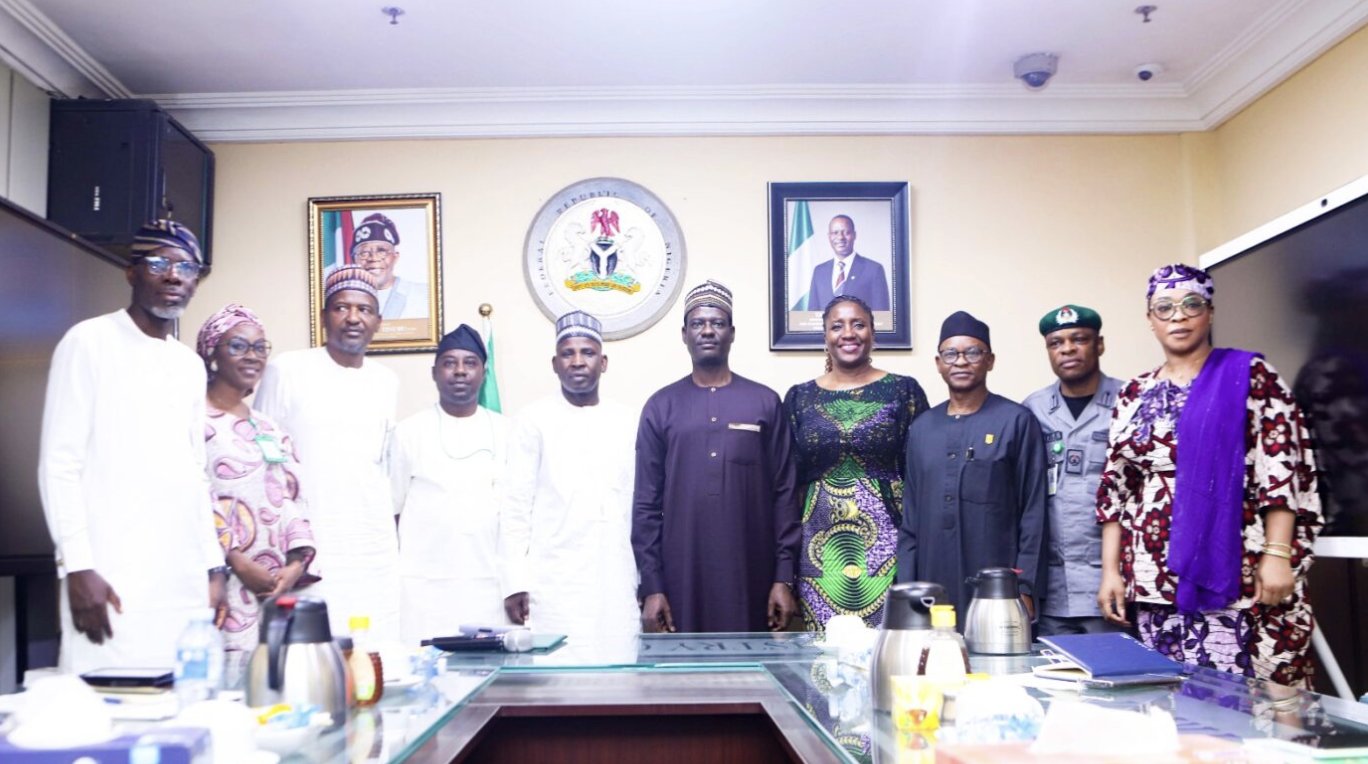
FG sets up committee to develop 2026 VAT modification order in 6 weeks
The federal government has inaugurated an inter-ministerial committee to develop the 2026 value-added tax (VAT) modification order to ensure the implementation of Nigeria’s new tax laws.
Taiwo Oyedele, minister of finance and coordinating minister of the economy, inaugurated the committee on Friday in Abuja.
In a statement on Saturday, Efe Ovuakporie, head of information and public relations at the ministry, said the committee is expected to provide greater certainty for businesses, investors, and tax administrators through the new VAT framework.
Oyedele said the committee is expected to develop a practical VAT framework that reflects the intent of the Tax Reform Acts, which took effect on January 1, 2026, and responds to the realities of today’s economy.
He described the legislation as the most extensive changes to Nigeria’s tax system in decades, stating that it is designed to simplify tax administration, improve certainty, enhance competitiveness, protect vulnerable Nigerians, and support sustainable economic growth.
The minister said the previous VAT modification order, issued under the repealed VAT Act, had served its purpose, noting that the new legal framework requires a fresh order to provide clarity, update relevant schedules, and support the effective implementation of the Nigeria Tax Act.
“This is not about reproducing an old document,” Oyedele said.
It is about developing a VAT Modification Order that is clear, practical and responsive to the needs of a changing economy.”
According to the minister, the new order should eliminate uncertainty, simplify tax compliance, support investment decisions and provide tax administrators with clearer guidance.
‘RECOMMEND COMPREHENSIVE SCHEDULE OF VAT EXEMPT, ZERO RATED SUPPLIES’
He directed the committee to review the legal framework, administrative practices, and policy directives governing VAT administration, particularly the VAT-exempt and zero-rated provisions contained in Part IV of the Nigeria Tax Act 2025.
Oyedele also asked members to engage stakeholders across government, the organised private sector, professional bodies and other interest groups to validate classifications and address implementation concerns.
The minister further instructed the committee to recommend a comprehensive schedule of the VAT-exempt and zero-rated supplies, taking into account revenue implications, social impact, Nigeria’s treaty obligations and regional integration commitments.
The committee is also expected to prepare a clear and implementable VAT modification order that aligns with the provisions of the Nigeria Tax Act and, where necessary, recommend amendments to the Tax Reform Acts and other enabling laws to strengthen implementation.
The minister urged the panel to ensure that its recommendations encourage industrial growth, support investment, promote exports, strengthen food security, encourage innovation and facilitate Nigeria’s energy transition without undermining the integrity of the VAT system.
He added that reducing ambiguity in VAT administration would improve certainty for taxpayers, investors, regulators and tax administrators.
“Businesses need certainty. Investors need confidence. Government needs a VAT system that is easy to administer and supports growth,” the minister said.
I urge you to approach this assignment with diligence, objectivity and a sense of urgency.”
The committee was given a deadline of six weeks to submit a draft VAT modification order, schedules of VAT-exempt and zero-rated supplies with their corresponding harmonised system codes, implementation notes, a stakeholder consultation report, and recommendations on any legislative amendments considered necessary.
Its membership comprises representatives of the federal ministry of finance, the Nigeria Revenue Service (NRS), the Nigeria Customs Service (NCS), the federal ministry of industry, trade and investment, the Joint Revenue Board (JRB), the Manufacturers Association of Nigeria (MAN), the tax advisory committee and the tax justice and governance platform.