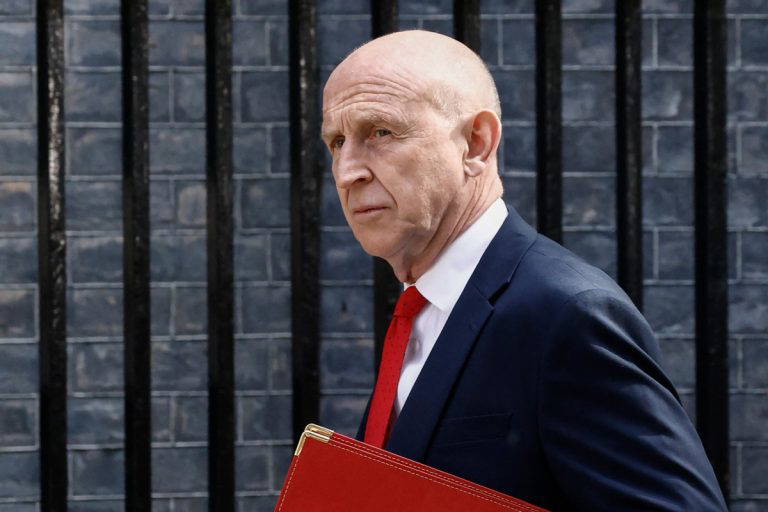
UK defence minister resigns with stinging rebuke of PM Starmer
British Defence Secretary John Healey dramatically resigned on Thursday, accusing Prime Minister Keir Starmer and the Treasury of failing to allocate sufficient funding to safeguard the nation.
His unexpected resignation represents another setback for Starmer and arrives at a sensitive time for the embattled Labour leader, just days before a by-election that could trigger moves to challenge his leadership.
In a strongly worded criticism, Healey warned that the long-delayed Defence Investment Plan (DIP) — covering military funding for the next decade and yet to be released — could leave Britain “less safe”.
“You have been unable, and the Treasury has been unwilling, to provide the resources the country needs to defend itself at this time of increasing threats,” Healey wrote in a resignation letter addressed to Starmer and shared on his X account.
“After making clear to you that I could not accept a DIP settlement that fails to equip our Armed Forces properly, I have no alternative but to resign.”
His abrupt exit follows months of postponements to the defence strategy, which Starmer had pledged to publish before a NATO summit in Turkey scheduled for July 7.
The Labour government, which came to power in July 2024 after 14 years of Conservative rule, has promised increased defence spending, with NATO obligations as a key priority.
The decision comes amid growing security concerns linked to Russia, as well as repeated calls from US President Donald Trump for NATO allies to boost military spending and reduce dependence on Washington.
– ‘Serious moment’ –
Starmer has committed to raising defence spending to 2.5 percent of GDP from next year, with plans to increase it to 3 percent if Labour wins the next general election expected in 2029, and potentially 3.5 percent by 2035.
British media reports have long highlighted internal disagreements within government over the Defence Investment Plan settlement.
In his resignation letter, Healey said he was only fully briefed on the plan on Monday, and that it would raise defence spending to just 2.68 percent of GDP by 2030.
He said this “falls far short of what is needed for defence at this critical time”.
“Without a DIP that rises to the moment, I would be forced into decisions that reduce our forces’ readiness, increase risk to personnel on operations, and potentially make the country less safe.”
Tan Dhesi, chair of parliament’s defence committee, urged the government to treat Healey’s warning “with the utmost seriousness”.
“That a defence secretary of his integrity and dedication has felt compelled to resign over the inadequacy of the proposed defence settlement is a serious moment,” the Labour MP said.
Starmer now faces political uncertainty ahead of next Thursday’s by-election, where Greater Manchester mayor Andy Burnham is contesting the Makerfield parliamentary seat and has indicated willingness to join any Labour leadership contest, though none has been formally triggered.
Wes Streeting stepped down as health secretary last month after poor local and regional election results for Labour and has also signalled interest in a future leadership bid.
Healey, 66, has previously been mentioned as a potential leadership contender, though there is no indication his resignation is linked to internal succession politics.
The Defence Investment Plan was initially expected in late 2025 but has been repeatedly delayed, frustrating industry stakeholders and observers.
It was reportedly due for release next week before the latest developments.
Analysts say Healey’s resignation “creates a chain of political challenges, from appointing a replacement to finalising the defence plan,” according to Ed Arnold of the RUSI think tank.
A government spokesperson maintained that Starmer has strengthened national security, adding that the proposed defence spending plans “will ensure the capabilities our armed forces require”.