CBN’s new FX manual may raise Dollar liquidity, enhance market confidence
By Emeka Anaeto, Business Editor
The Central Bank of Nigeria (CBN) has recently introduced the fourth edition of its Foreign Exchange Manual, which was officially launched in Abuja and is scheduled to become effective on June 1. The updated framework is expected to enhance transparency in the FX market, boost liquidity, and strengthen overall confidence among market participants. It also reflects the CBN’s wider objective of ensuring fair and equal access to foreign exchange for both businesses and individuals within a more transparent and liquid system.
The unveiling of this revised Foreign Exchange Manual marks a significant milestone in the CBN’s continued reforms aimed at improving transparency, deepening liquidity, and restoring trust in Nigeria’s foreign exchange market as part of broader economic restructuring efforts.
Set to take effect from June 1, 2026, the new manual is designed to serve as an updated regulatory guide for commercial banks, importers, exporters, government institutions, and other stakeholders involved in FX transactions. For many years, Nigeria’s foreign exchange market has remained one of the most sensitive and influential components of the national economy.
Fluctuations in the naira directly affect the cost of essential goods and services, including food, transportation, education, healthcare, fuel, and manufacturing, ultimately influencing the general cost of living.
Businesses rely heavily on foreign exchange for importing raw materials and machinery, while investors closely monitor market stability before committing funds to the economy.
Although the FX market may seem technical and distant to many citizens, its effects are deeply felt in daily life through inflation levels, job creation, purchasing power, and overall economic stability.
Against this backdrop, the launch of the fourth edition has drawn significant attention from the financial sector, banking industry, and wider business community.
In recent years, Nigeria has faced persistent challenges, including pressure on the naira, limited FX liquidity, multiple exchange rate regimes, speculative trading activities, and declining investor confidence.
These structural issues have contributed to uncertainty in the business environment and have significantly fueled inflationary pressures nationwide.
Manufacturers have repeatedly complained about difficulties in accessing foreign exchange for importing essential raw materials, while airlines have faced challenges repatriating their revenues.
Similarly, foreign investors have often delayed investment decisions due to concerns about profit repatriation, while the gap between official and parallel market rates has widened at various times.
The introduction of this new manual therefore represents more than a routine policy update; it reflects a strategic effort by the CBN to rebuild trust in Nigeria’s foreign exchange system after years of volatility.
Policy Vision and Strategic Direction
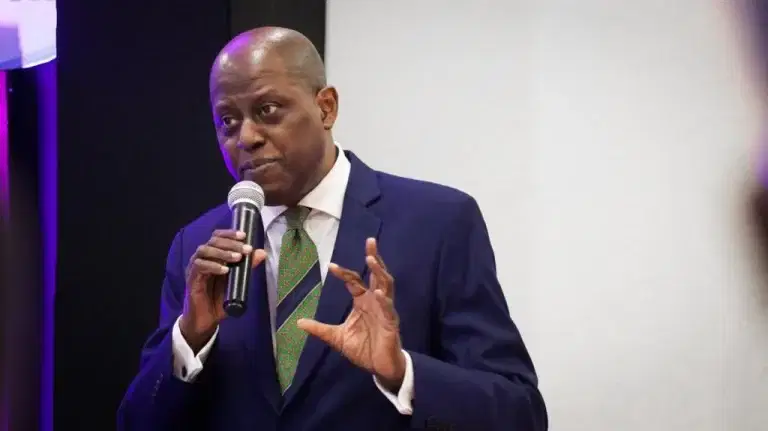
At the official unveiling, the Governor of the Central Bank of Nigeria, Olayemi Cardoso, described the manual as part of ongoing reforms aimed at strengthening macroeconomic stability, improving transparency, and restoring confidence in the FX market.
His remarks went beyond the mere presentation of a policy document, highlighting the broader direction of current monetary reforms under the apex bank.
Cardoso emphasized that the foreign exchange market is not just a platform for currency trading, but a key mechanism that influences price stability, investor sentiment, and the movement of goods and capital in an open economy.
He noted that FX plays a critical role in supporting economic activity by anchoring stability, enabling trade flows, and shaping investor expectations.
Transparency, Consultation, and Enforcement
A central theme of the governor’s remarks was transparency, as he stressed the importance of openness, accountability, and fairness in FX operations.
He explained that the revised manual was developed through extensive consultations with banks and other stakeholders rather than being imposed unilaterally by regulators.
According to him, the document reflects a collaborative process that considered the concerns and inputs of market participants.
This approach seeks to address long-standing complaints that FX policies were previously introduced abruptly, inconsistently, or without sufficient clarity, creating uncertainty in the market.
Over time, such policy inconsistencies contributed to speculation and weakened investor confidence.
By engaging stakeholders more directly in the reform process, the CBN aims to foster better compliance and stronger cooperation within the system.
Market Liquidity and Structural Shift
Another key focus of Cardoso’s address was the issue of liquidity and market depth.
He explained that the overarching goal of the reforms is to build a more liquid and efficient foreign exchange market, where transactions can occur smoothly without causing sharp price distortions.
A liquid market is generally associated with stronger confidence, as participants can easily buy and sell FX without major disruptions.
He further noted that Nigeria’s FX system has transitioned from a largely one-directional structure, where the CBN was the dominant supplier of foreign exchange, to a more dynamic market-driven system.
In the past, the market relied heavily on periodic interventions from the central bank, creating dependence and limiting private sector participation.
This structure also placed significant pressure on external reserves, as the CBN frequently supplied FX to stabilize demand.
According to Cardoso, this model is gradually being replaced by a more transparent and market-responsive system.
Official figures suggest that daily FX turnover has risen significantly, increasing from around $100 million in earlier phases of the current administration to between $400 million and $600 million daily.
In some instances, transactions have reached as high as $1 billion in a single day, indicating stronger activity and improved confidence among participants.
Cardoso’s remarks on reserves also drew attention, as he stated that reserves should not be viewed as a primary source for funding the FX market.
This represents a shift from earlier policy approaches where reserves were frequently used to defend the naira.
Economists have long debated the sustainability of such interventions, noting that while they may offer short-term stability, they are difficult to maintain under weak external inflows.
The current strategy appears to favor a more market-oriented system where supply and demand determine pricing, while reserves are preserved as buffers against external shocks.
This approach also aims to attract more autonomous FX inflows through exports, investments, and diaspora remittances.
Understanding the Policy Manual
The Deputy Governor for Economic Policy, Mohammed Sani Abdullahi, provided further technical insights into the structure and purpose of the revised manual.
He explained that the reform initiative was conceived at the beginning of Cardoso’s tenure as part of efforts to restore confidence, improve transparency, deepen liquidity, and strengthen market efficiency.
This indicates that the review process is part of a broader restructuring of Nigeria’s monetary and exchange rate framework.
He added that the CBN identified the need for a regulatory framework that aligns with global best practices, reduces inefficiencies, and promotes a more rules-based system.
Such improvements are intended to enhance price discovery, where market forces determine exchange rates based on demand and supply.
The revised manual is also designed to serve as a comprehensive reference document that harmonizes procedures and standardizes practices across banks, corporates, exporters, and government agencies.
Importantly, it adopts an Ease of Doing Business approach aimed at reducing delays, bottlenecks, and operational inefficiencies that have historically affected trade and investment activities.
By streamlining processes, the CBN hopes to encourage more participants to operate within the official FX market rather than informal channels.
Views from Stakeholders
Stakeholder reactions at the launch underscored strong alignment between fiscal authorities, monetary policymakers, and the banking sector.
Representing the Minister of Finance, the Permanent Secretary for Special Duties, Mohammed Sanusi Danjuma, described the manual as a major advancement in strengthening Nigeria’s FX management system.
He noted that FX reform is not solely a monetary policy issue but a central component of the country’s broader economic transformation agenda.
Danjuma further highlighted that the reforms come at a critical time as the government continues implementing wide-ranging fiscal and structural changes under President Bola Ahmed Tinubu’s administration, including subsidy removal, tax reforms, and exchange rate liberalisation.
While these policies aim to correct long-standing distortions, they have also contributed to short-term inflationary pressures and rising living costs.
His remarks reinforced the government’s commitment to maintaining policy consistency, which he described as essential for economic growth and investor confidence.
From the banking sector, Oliver Alawuba, Chairman of the Body of Banks’ Chief Executives and Group Managing Director of United Bank for Africa, described the manual as part of a broader reform agenda focused on transparency, compliance, documentation, and oversight.
He linked the initiative to earlier reforms such as the Electronic Foreign Exchange Matching System and the Nigerian Foreign Exchange Code, both aimed at modernizing market operations.
Alawuba illustrated the progress in the FX market by comparing past and present conditions, noting that banks once struggled to source foreign exchange, whereas today liquidity has improved to the extent that banks now sometimes seek customers with FX to sell.
He described the current environment as one of improved confidence and stronger market participation, moving away from earlier periods of scarcity dominated by central bank interventions.
He concluded by expressing confidence in the reforms and reaffirmed the banking sector’s commitment to supporting Nigeria’s long-term ambition of becoming a $1 trillion economy.