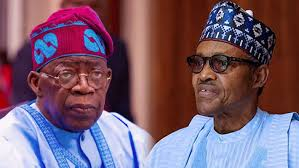
Buhari, not Tinubu highest borrower – Report
By Emma Ujah, Abuja Bureau Chief
Amid growing public debate over the Federal Government’s borrowing activities, policy and communications organisation Think Business Africa has argued that former President Muhammadu Buhari, rather than President Bola Tinubu, remains the biggest borrower in Nigeria’s democratic history since 1999.
The current administration has faced criticism over its continued resort to borrowing despite implementing fuel subsidy removal and tax reforms, measures that have substantially boosted government revenues over the past three years.
In a report released on Wednesday, the group stated that the sharp increase in Nigeria’s debt profile, when measured in naira, was largely driven by the 2023 exchange-rate adjustment, which significantly increased the local currency value of foreign debts, rather than by fresh borrowing undertaken by the Tinubu administration.
According to the report, “President Bola Ahmed Tinubu cannot be accurately described as Nigeria’s largest borrower since the return to democratic rule in 1999. Assertions that the present administration has accumulated more debt than all previous governments combined are not supported by available dollar-based debt data.
“A closer examination of the figures shows that the country’s debt story is more complex. The substantial rise in debt figures expressed in naira since 2023 is largely attributable to the revaluation of inherited foreign obligations following exchange-rate reforms, rather than an equivalent increase in new loans.”
The organisation, however, acknowledged that Nigeria’s debt burden remains a serious concern, noting that increasing debt-service obligations continue to strain public finances and reduce the government’s ability to invest in key sectors such as infrastructure, healthcare, and education.
The report revealed that Nigeria’s external debt stood at about $42.5 billion when President Tinubu assumed office in May 2023 and rose to approximately $51.9 billion by December 2025, reflecting an increase of about $9.4 billion.
In comparison, the group noted that external debt grew from roughly $10.3 billion in 2015 to $42.9 billion in 2023 under the Buhari administration, representing an increase of about $32.6 billion over the eight-year period.
“The available data indicate that the most significant increase in Nigeria’s external debt stock during the democratic era occurred between 2015 and 2023,” the report stated.
It further explained that public perception of excessive borrowing under the Tinubu administration was largely influenced by the depreciation of the naira following the exchange-rate unification policy introduced in June 2023.
“Much of the apparent rise in debt figures expressed in naira reflects the revaluation of existing foreign-currency liabilities inherited by the current administration rather than new borrowing of the same magnitude,” the group said.
It added that, in dollar terms, Nigeria’s domestic debt declined by approximately $6.5 billion under the present administration, while total public debt increased by only about $2.7 billion between the first quarter of 2023 and the fourth quarter of 2025.
Think Business Africa also highlighted the impact of exchange-rate reforms, noting that the foreign debt inherited in 2023, valued at about $42.5 billion, experienced a significant increase in naira terms after the local currency depreciated against the US dollar.
However, the report did not take into account the difference in tenure between the two administrations, as former President Buhari served for eight years, while President Tinubu has so far completed only three years in office.
Despite its findings, the group stressed that Nigeria still faces serious fiscal pressures, warning that mounting debt-service costs accumulated over several years continue to limit resources available for critical sectors including security, healthcare, education, and infrastructure development.