Incorporate indigenous philosophies into environmental management, Toyin Falola tells policymakers
Toyin Falola, professor of history, has urged Nigeria to embrace indigenous African ecological knowledge as part of efforts to address the country’s growing environmental challenges.
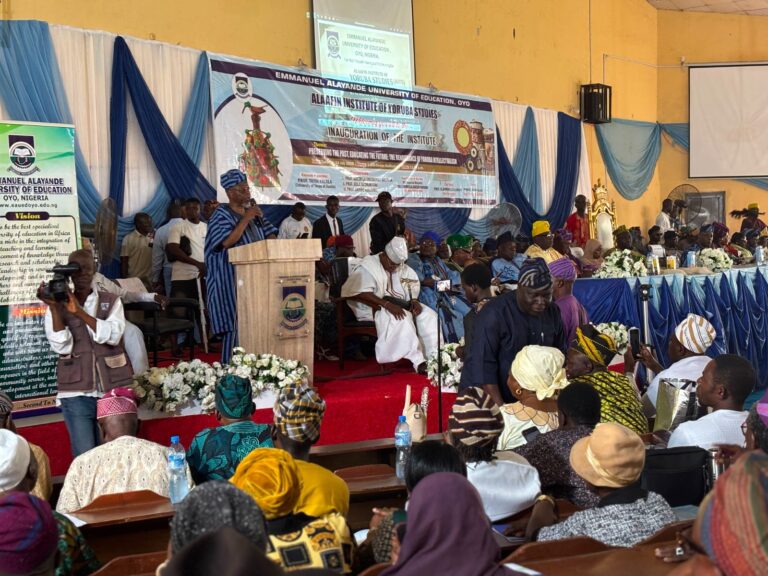
Falola made the call while delivering a keynote address titled ‘Yorùbá Mythologies and their Relevance Today’ at the inauguration of the Alaafin Institute of Yoruba Studies, Emmanuel Alayande University of Education, Oyo.
The event was held under the theme, ‘Preserving the Past, Educating the Future: The Renaissance of Yoruba Intellectualism’.
He said the impacts of climate change, deforestation, pollution and environmental degradation cannot be effectively addressed through modern science and legislation alone.
Speaking on the value of indigenous knowledge systems, Falola said Yoruba mythology “holds ancient ecological knowledge about our natural world. Many rivers, forests, mountains, animals, and plants are considered sacred because they are linked to Òrìṣà. These traditions can teach us about respecting and preserving the earth”.
He urged policymakers, educators and researchers to incorporate indigenous ecological philosophies into environmental education, public policy and community development programmes.
Speaking on the significance of the newly inaugurated Alaafin Institute of Yoruba Studies, Falola said it offers an opportunity to recover and institutionalise traditional African knowledge systems that can contribute to national development.
The institute also honoured Falola for his global promotion of Yoruba language, history and culture, recognising his decades of scholarship, publications, mentorship and international advocacy for the preservation of Yoruba civilisation.
The inauguration was attended by prominent traditional rulers, academics and cultural advocates, including Oba Akeem Abimbola Owoade, Alaafin of Oyo; Olanrewaju Olaniyan, a professor and vice-chancellor of Emmanuel Alayande University of Education; and Akinkunmi Alao, a professor and director of the Alaafin Institute of Yoruba Studies.
Following the keynote address, a panel comprising Ademola Dasylva, Sola Olorunyomi and Arinpe Adejumo, all professors, discussed the lecture, highlighting its importance to the revival of indigenous African epistemologies and intellectual traditions.