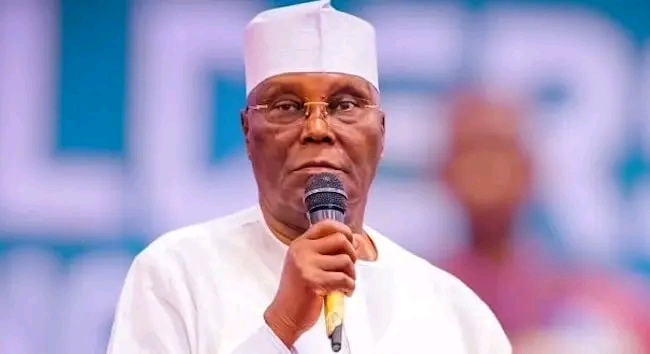
Insensitive move’ – Atiku reacts to WAEC, NECO fee increment
Presidential candidate of the African Democratic Congress, ADC, Atiku Abubakar, has condemned the recent increase in fees for Federal Unity colleges and the approval of a uniform N50,000 examination fee for candidates sitting the West African Examinations Council, WAEC, and National Examinations Council, NECO, examinations from 2027.
Atiku described the increments as cruel and economically insensitive.
It was reported that the initial registration fee for the examinations was N27,500 before the Federal Government approved an increase to N50,000 for candidates sitting the Senior School Certificate Examinations, SSCE, conducted by WAEC and NECO.
The approval was conveyed in a memo dated June 18, 2026, signed by the Director of Senior Secondary Education at the Federal Ministry of Education, Mr. Adeniji Ibrahim, on behalf of the Minister of Education.
Reacting via a statement issued by his Senior Special Assistant on Public Communication, Phrank Shaibu, Atiku said it is unconscionable that at a time when Nigerian families are battling record inflation, soaring food prices, rising transportation costs, crippling electricity tariffs, stagnant incomes and widespread unemployment, the Tinubu administration chose to make education even more expensive.
A government that genuinely believes in the future of its people does not erect financial barriers between children and education. It removes them.
“Education is not a privilege reserved for the wealthy; it is the birthright of every Nigerian child and the foundation upon which prosperous nations are built.
“Nigeria already bears the painful distinction of having one of the largest populations of out-of-school children in the world. Depending on the methodology and age group measured, between 10.5 million and about 15 million Nigerian children and young people are already outside the classroom.
No nation has ever taxed its way into educational excellence. Countries that aspire to economic greatness invest more not less in education during difficult times because they understand that human capital is the engine of sustainable development. Nigeria cannot build a globally competitive economy while systematically pricing millions of its children out of classrooms,” the statement reads.