Poverty, poor education still grip millions in north-west – Sanusi
By Hadiza Yusuf
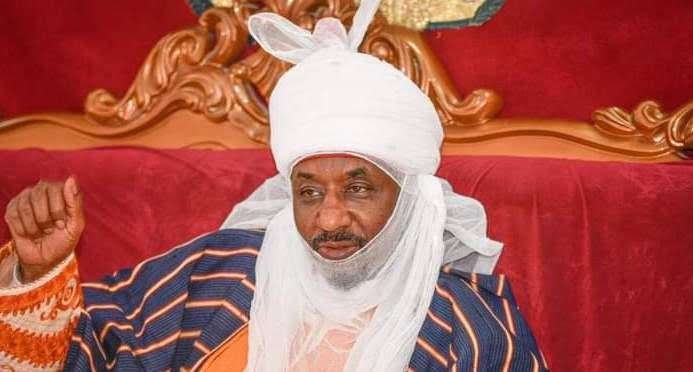
The Emir of Kano, Muhammadu Sanusi II, has expressed concern over the growing rate of poverty, inadequate educational opportunities, and poor healthcare services affecting millions of residents across Nigeria’s North-West region.
Speaking during a high-level policy dialogue held in Kano on Wednesday, Sanusi urged leaders to acknowledge and address the pressing challenges confronting the region in order to achieve meaningful development.
“We must be honest with ourselves,” the Emir stated.
He noted that despite various interventions implemented over the years, many communities in the North-West continue to face severe poverty, limited access to quality education, and insufficient healthcare facilities.
Sanusi warned that genuine progress would remain elusive if leaders shy away from confronting difficult realities and fail to implement practical solutions.
He also criticised what he described as a tendency to make promises without delivering tangible outcomes.
“Leaders must avoid replacing action with mere announcements,” he said.
According to him, government policies should be designed to bring measurable improvements to the lives of ordinary citizens.
The Emir stressed that reducing poverty and inequality requires committed leadership as well as sustained investments in key sectors such as education and healthcare.
Also speaking at the event, Vice President Kashim Shettima, represented by Deputy Senate President Barau I.
Jibrin, advocated the introduction of a Universal Child Benefit programme aimed at supporting vulnerable households.
“The condition of a child reflects the condition of society. When children go hungry, the future of that society is at risk,” he said.
He explained that direct financial support for families would contribute to better child nutrition, increased school attendance, and a reduction in child labour and early marriages.
Meanwhile, UNICEF representative Wafaa Saeed emphasised the importance of effective policy implementation, noting that unequal access to essential services remains a significant challenge across the region.
She called for stronger social protection measures to help households withstand economic difficulties, insecurity, and the effects of climate change.
At the conclusion of the meeting, governors from the North-West region agreed that poverty reduction must be treated as a matter of urgency.
They pledged to increase funding, enhance collaboration, and broaden social protection initiatives aimed at improving the welfare of citizens throughout the region.