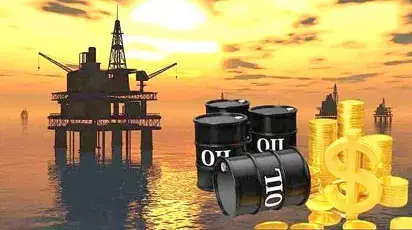
Oil plunges to $80 per barrel, stocks jump on US-Iran peace deal
Global markets surged on Monday while oil prices retreated sharply after the United States and Iran announced an agreement aimed at ending hostilities in the Middle East and restoring shipping through the Strait of Hormuz.
The development eased concerns over global energy supplies, with investors welcoming the reopening of the strategic waterway that carries nearly one-fifth of the world’s crude oil exports. The route had been largely disrupted following military strikes involving the United States, Israel and Iran earlier this year, triggering a spike in oil prices.
Under the agreement, which is expected to be formally signed in Switzerland on Friday, both sides will move toward ending a conflict that has lasted for three months and raised fears of renewed inflationary pressures across the global economy.
Oil prices fell by around five percent, reversing part of the gains recorded after crude surged beyond $110 per barrel at the height of the crisis.
Investor optimism spread across global equity markets. On Wall Street, major indexes opened higher, with the Nasdaq leading gains. Shares of SpaceX advanced another eight percent following the company’s landmark $75 billion initial public offering.
European and Asian markets also posted strong performances, while the US dollar weakened as demand for traditional safe-haven assets eased.
In Asia, stock markets in Tokyo and Seoul climbed about five percent each, supported by strong buying interest in technology stocks. European bourses also moved higher, with Paris and Frankfurt recording gains. London’s FTSE 100, however, edged lower as declining oil prices weighed on major energy companies.
Russ Mould, investment director at AJ Bell, noted that while the announcement boosted sentiment, the market reaction was somewhat restrained.
“Investors welcomed the news, but gains were moderated by the fact that markets had already recovered significantly in recent weeks,” he said, adding that concerns about inflation remain despite the easing of geopolitical tensions.
Iran’s Deputy Foreign Minister, Kazem Gharibabadi, described the agreement as bringing an immediate halt to the conflict and said discussions on a comprehensive settlement would continue over the next two months.
Details of the accord remain limited, however, following weeks of difficult negotiations and repeated warnings from US President Donald Trump about possible military action despite an earlier ceasefire reached in April.
Announcing the breakthrough, Trump declared that the agreement with Iran had been finalized and called for global energy flows to resume.
Attention is now turning to central bank meetings scheduled for later this week. Analysts expect both the US Federal Reserve and the Bank of England to keep interest rates unchanged as policymakers assess whether inflationary pressures will ease following the drop in energy prices.
The Federal Reserve meeting will be the first under Chairman Kevin Warsh and comes amid continued calls from President Trump for lower borrowing costs to support economic growth.
Market analysts say investors will closely watch the Fed’s comments on inflation, which remains above the central bank’s long-term target.
Meanwhile, the Bank of Japan is widely expected to raise interest rates, following the European Central Bank’s quarter-point increase announced last week.
As of 1345 GMT, Brent crude was down five percent at $82.93 per barrel, while West Texas Intermediate fell 5.3 percent to $80.40. The Dow Jones Industrial Average rose 1.1 percent, the S&P 500 gained 1.6 percent and the Nasdaq climbed 2.6 percent.
Across Europe, the CAC 40 advanced 0.7 percent and Germany’s DAX added 1.3 percent, while the FTSE 100 slipped 0.3 percent. In Asia, Japan’s Nikkei 225 surged five percent, Hong Kong’s Hang Seng gained 0.7 percent and Shanghai’s Composite Index rose 1.6 percent.